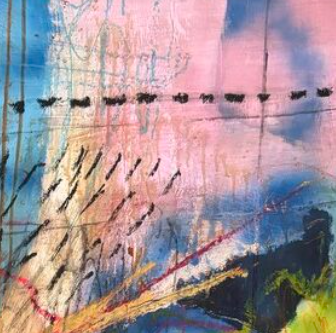
Image source: https://leedsliving.co.uk/art-culture/making-space-at-the-stanley-audrey-burton-gallery-30-june-29-august/ (Accessed: 8 August 2026). © Molly Newham
Molly Newham, Solo fast packing 50 miles of the West Highland Way (2026), acrylic and mixed media on paper.
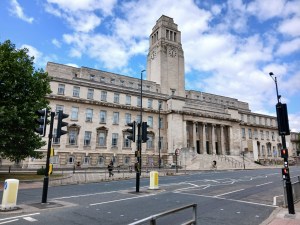
It’s the first day of August, and I’m back at one of my favourite spots – the Stanley & Audrey Burton Gallery, located within the Parkinson Building at the University of Leeds. I’m here primarily to see Making Space, a student-curated group exhibition which brings together an eclectic range of works from current and recent students.[1]
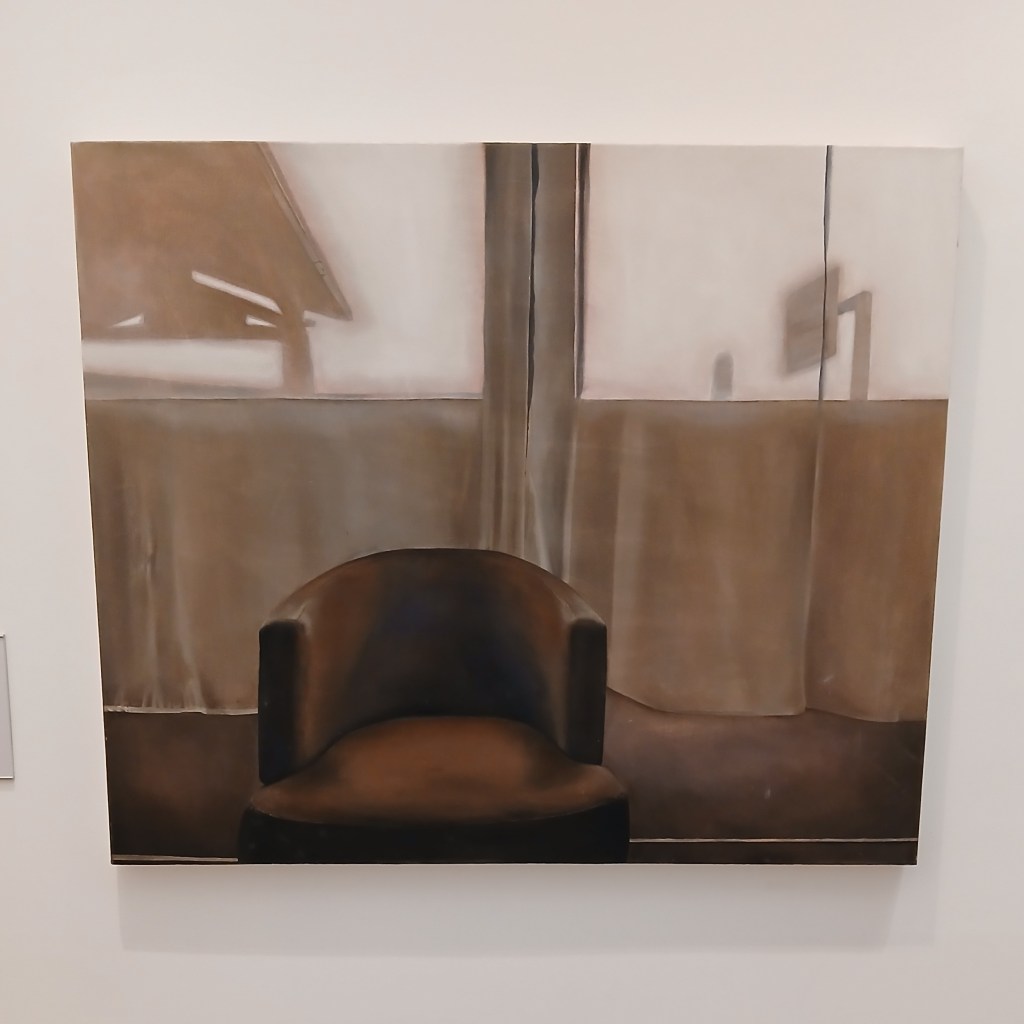
Tess Hardy’s Wait (figure 1; 2026) quickly catches my attention. Hardy’s paintings challenge our perceptions of the familiar, focusing our attention onto spaces that would typically go unnoticed.[2] In the foreground, a leather chair is placed uncomfortably close to the viewer; behind it, a translucent net curtain forms a misty veil, reducing the world outside to a pair of unidentifiable structures. The result is somewhat unsettling, evoking the particular sense of stasis that precedes an important event.
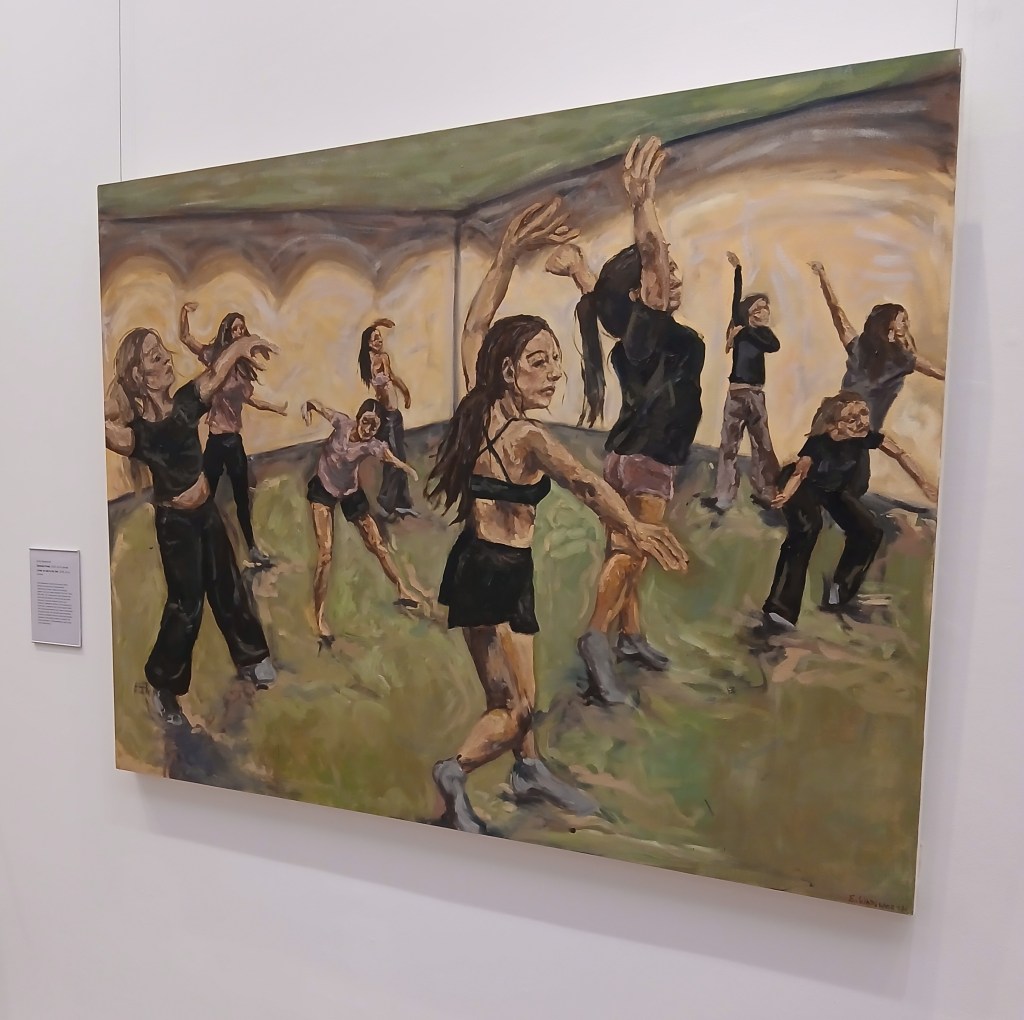
Emily Wadsworth’s work, meanwhile, draws parallels between complex ecosystems and human communities, highlighting the importance of connection and cooperation.[2] In Dancers/Forest (figure 2; 2025), a dance class is in full swing; the viewer is immediately drawn to the central figure, who carries an assured, focused expression.
A range of other figures in various poses populate the space, their faces and extremities increasingly abstracted as if blurred by energetic rhythm, and their bodies built up from thick, fluid brushstrokes which give the impression of perpetual motion. In fact, the whole painting appears to be moving – the floor, walls, and ceiling, just like the figures, are bristling with vitality.
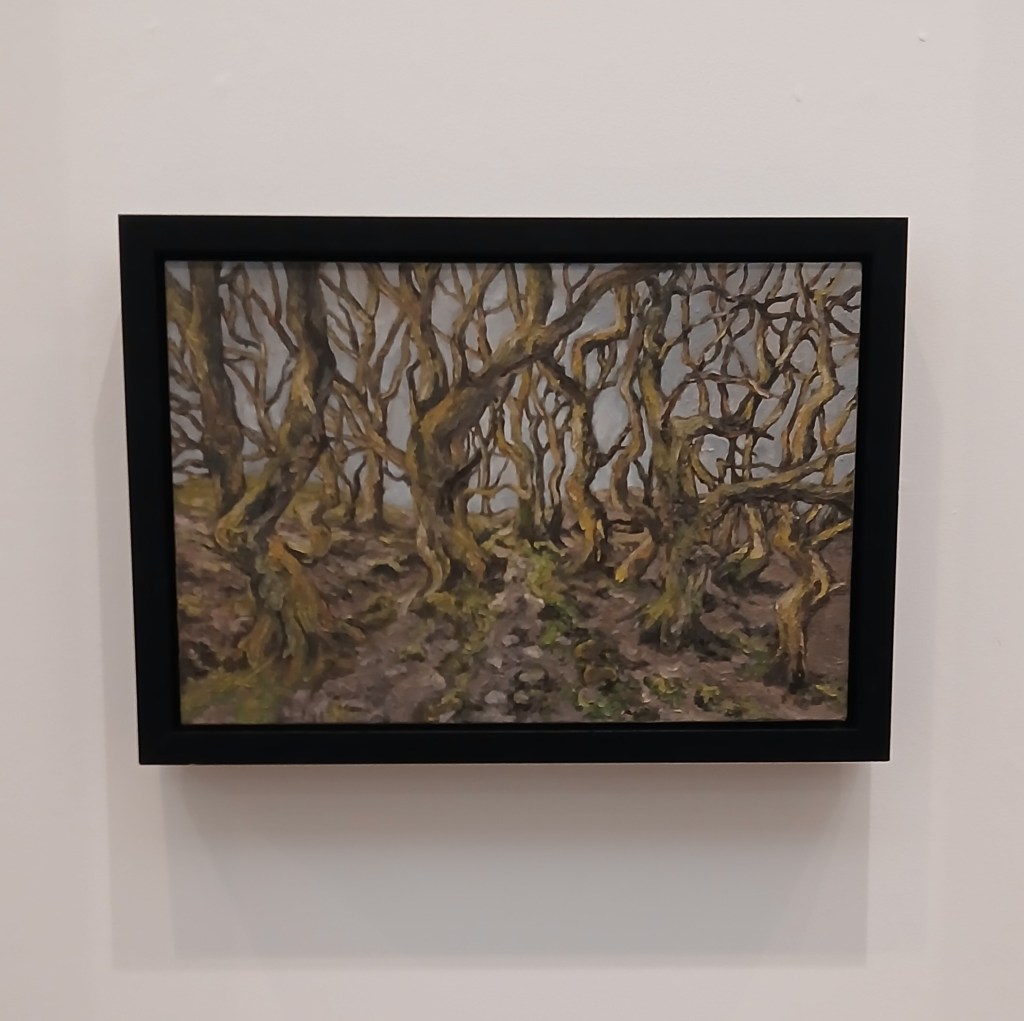
In Limbs: an ode to the Deri (figure 3; 2025), also by Wadsworth, her sinuous brushstrokes are transformed into an intricate network of tree branches, criss-crossing, overlapping, and twisting around one another. Here, just like in the dance class, cooperation is key; the trees work together to each establish their own space.
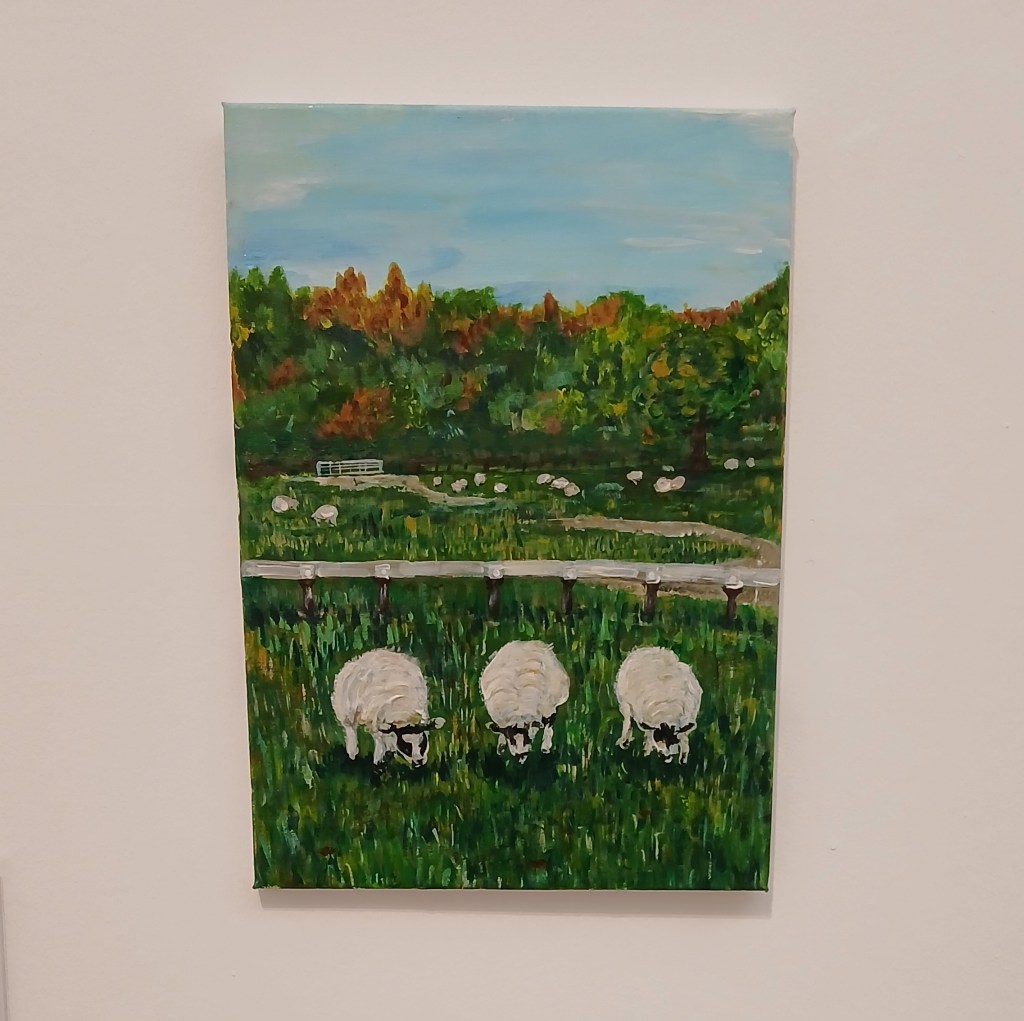
A more discrete work is Adrian Lam’s Sheep on a Yorkshire Farm (figure 4; 2025). Lam takes inspiration from Impressionism, and in particular, the work of Claude Monet.[2] The way in which he builds up this painting with small marks of pure colour is not dissimilar to the technique evidenced in Monet’s Automne à Jeufosse (c. 1884) – a notable highlight of the gallery’s permanent display.[3]
In the foreground of the painting, a trio of sheep graze happily in the tall, lush grass. In the middle ground, neatly demarcated by man-made boundaries, the pleasant scene continues. In the background, a wall of trees – just beginning to change colour – give way to the calm sky. As well as displaying a flawless compositional balance, this painting clearly communicates a heartfelt appreciation of the Yorkshire countryside.
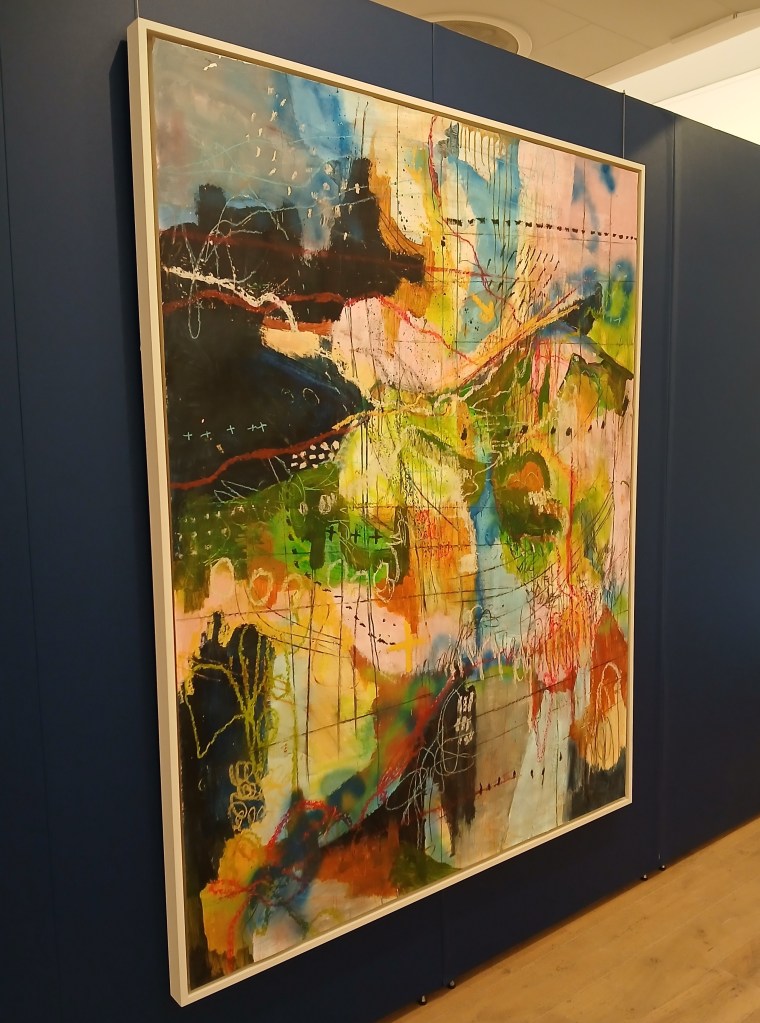
Molly Newham’s Solo fast packing 50 miles of the West Highland Way (figure 5; 2026), fragments of which appear prominently in the exhibition’s promotion, is perhaps the star of the show. It’s a large, abstract, acrylic and mixed-media work which conveys her experience of the natural environment as a keen long-distance runner.[2] It recalls the tradition of British landscape painting, but at the same time, its eclectic, chaotic style is distinctly contemporary.
It’s a dense and extremely complex piece, loaded to the brim with colour and texture. There are drips, splodges, veils and smears. Things appearing and disappearing, things half-revealed, things shifting in and out and merging with each other; a rainstorm, a pathway, the cloud breaking, fields, hillsides, the changing light, fragments of landscapes, rocks, tarmac, the way back home.
*
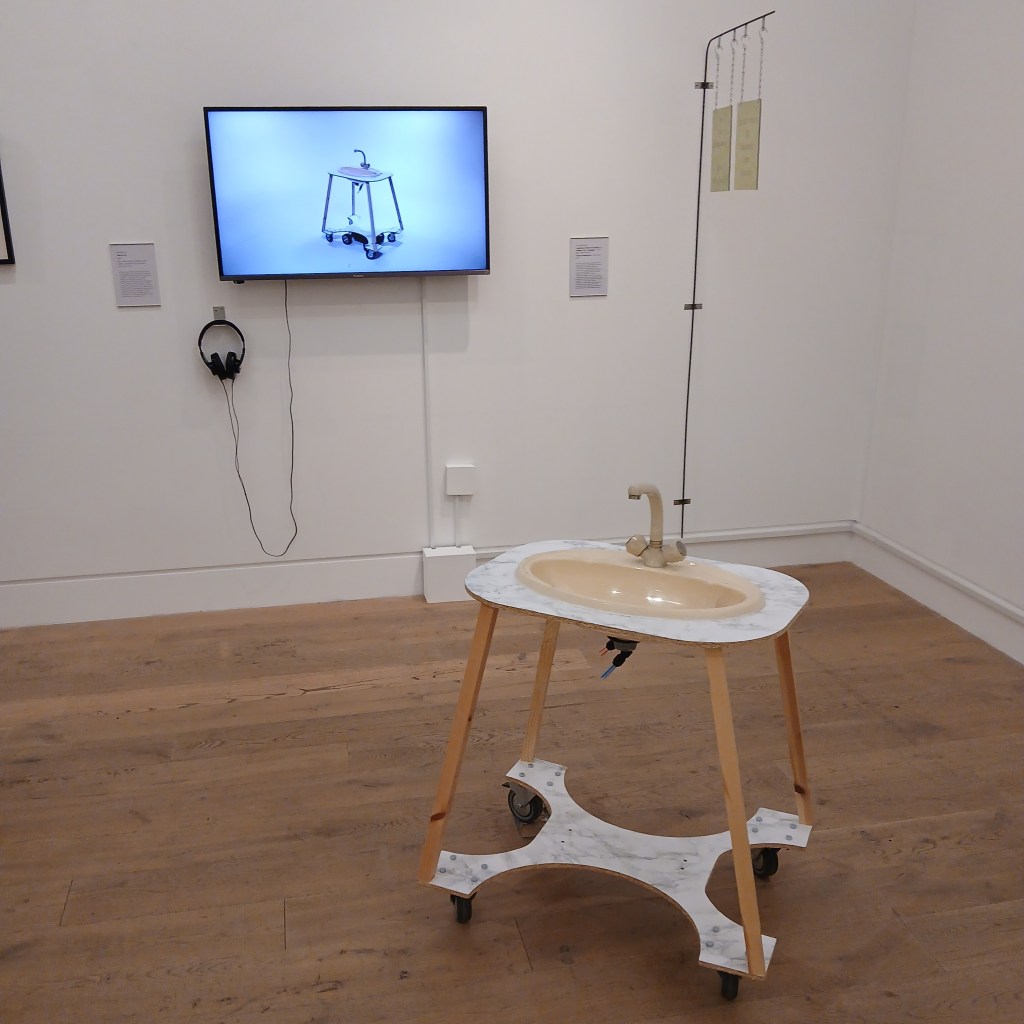
Movement and stillness – the most prominent themes of this exhibition, conveyed with humour in Bex Blayney’s Electric Sink (figure 6; 2024). Blayney’s work revels in absurdity, placing everyday objects far outside of their usual contexts.[2] On a TV screen mounted to the gallery wall, a wheeled sink (powered by remote control) moves aimlessly around a clinical white space with a gentle whirr, sometimes disappearing from shot. In front of the screen, the sink itself is clumsily positioned in the middle of the gallery, forcing visitors to shuffle carefully around it.
Removed from its normal context and dumped into the art world, the sink becomes animated by a personality – one which is restless, playful, irreverent, and perhaps a bit annoying. I can’t help but feel that it might start moving around the gallery by itself as soon as I turn my back to it.
[1] University of Leeds (no date) Making Space. Available at: https://library.leeds.ac.uk/events/event/1900/galleries/1047/making-space (Accessed: 8 August 2026).
[2] Making Space (2026). [Exhibition]. The Stanley & Audrey Burton Gallery. 30 June-29 August.
[3] University of Leeds Libraries Blog (2022). Bringing Monet and More to the People of Leeds. Available at: https://leedsunilibrary.wordpress.com/2022/01/19/bringing-monet-and-more-to-the-people-of-leeds/ (Accessed: 8 August 2026).


Leave a Reply