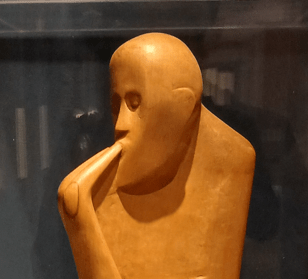
Thumbnail: Harold Gosney, Jazzman (2020). © Harold Gosney
See also (Photos of exhibition): https://www.yorkartgallery.org.uk/exhibition/harold-gosney-materials-and-making/ (Accessed: 22 February 2026).
Currently on display at York Art Gallery is an exhibition of works by York-based sculptor and artist, Harold Gosney. As its title suggests, the exhibition presents a thorough exploration of Gosney’s creative process, focusing particularly on the way in which his sculptures are informed by his drawings.[1]
Materials and Making features over 45 works, many of them recent, and many of which are on display for the first time.[1] Some of Gosney’s sculptures are expertly carved from wood, while others are constructed from copper; their themes reflect the artist’s personal fascinations – horses, music, and the human figure.[2]
Figure 1: https://www.yorkpress.co.uk/resources/images/20256419/?type=mds-article-620 from https://www.yorkpress.co.uk/news/25658335.sculptor-harold-gosney-new-exhibit-york-art-gallery/ (Accessed: 22 February 2026).
Self-Portrait Drawing (1997; figure 1), a human-scale sculpture of the artist at work, marks a natural starting point. To create the contoured surfaces of his copper figures, Gosney lines a clay mould with copper pieces of varying size and shape before welding them together;[2] this careful process is evident in the finished work, which appears both delicate and solid.
Figure 2: https://artuk.org/discover/artworks/father-and-dead-son-bam-272421 (Accessed: 22 February 2026).
The convincing likeness of Self-Portrait Drawing, however, is quickly overpowered by the incredibly emotive Father and Dead Son, Bam (2004; figure 2). This sculpture is among the smallest in the exhibition, but also the most powerful; its straightforward title leaves no doubts as to its tragic subject, referring also to the disaster that prompted its creation – the earthquake which devastated the city of Bam, Iran, in December 2003.[3]
Figure 3: https://artuk.org/discover/artworks/reverie-272468 (Accessed: 22 February 2026).
The wonderfully elegant Reverie (2015; figure 3), meanwhile, elevates the mood. Specially commissioned for the reopening of York Art Gallery a decade ago, this serene, tranquil vision of a human face was hewn from two large pieces of oak.[3]
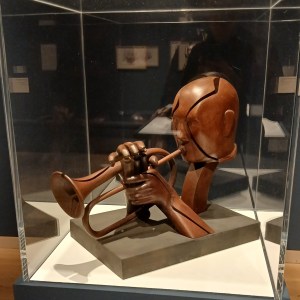
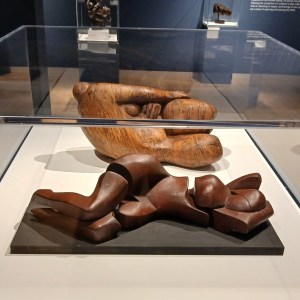
Many of Gosney’s wooden sculptures, such as Deconstructed Flugelhorn Player (2020; figure 4) and Reclining Female (2025; figure 5), display a highly distinctive style. Whether carved from oak, teak, or limewood, their beautifully smooth surfaces are punctuated by fault lines, revealing their complex construction. Although the distant echoes of Henry Moore and Henri Matisse can sometimes be felt in these works, Gosney’s handling of materials is unmistakably his own.
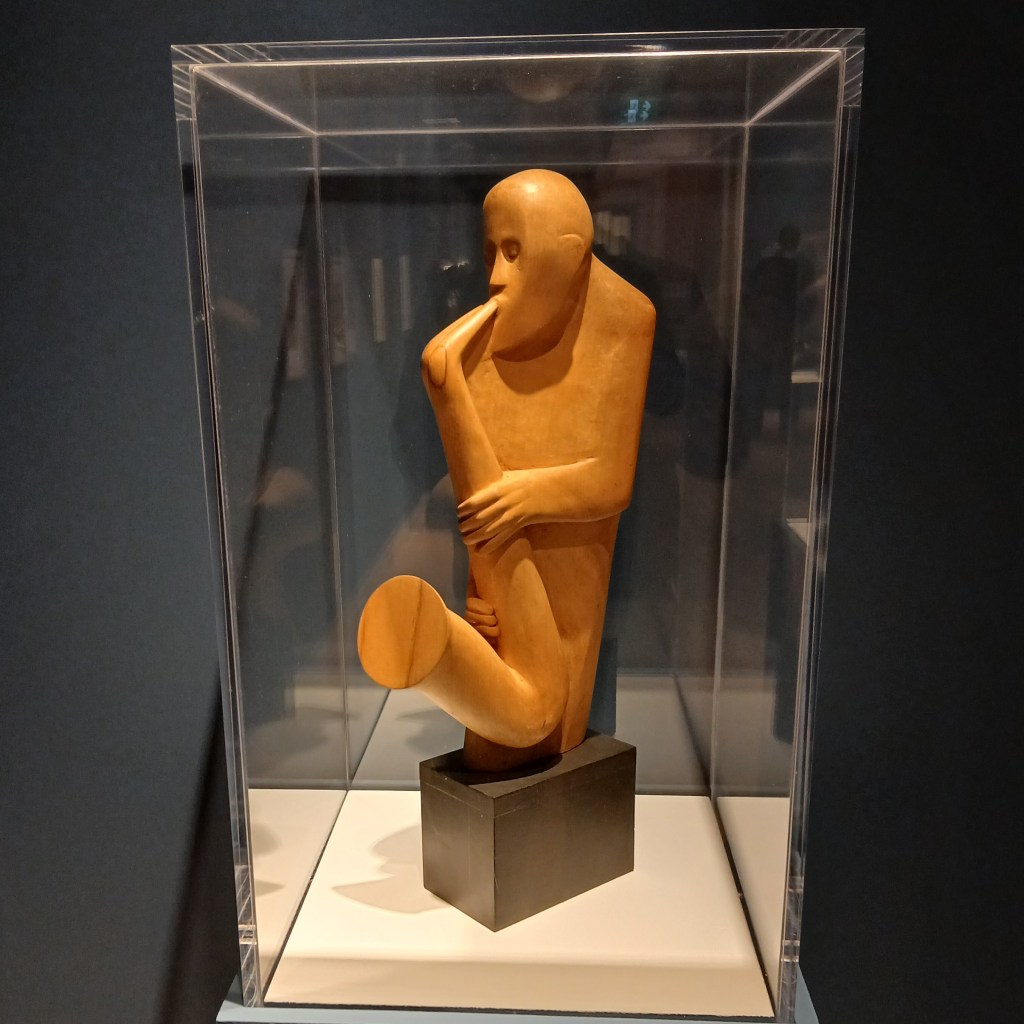
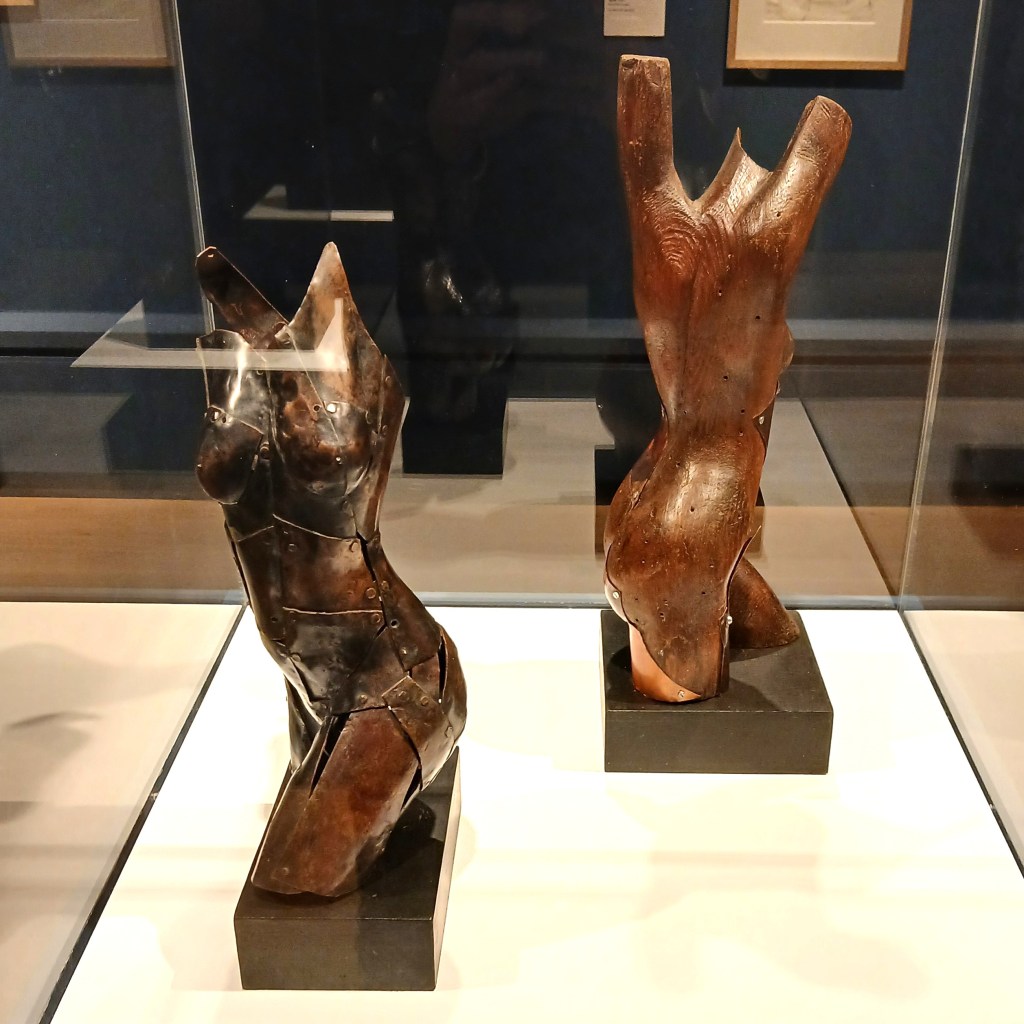
As we wander through the display, passing by the baboon-like Jazzman (2020; figure 6) – carved from a narrow piece of sycamore – we arrive at a curious pair of works dating from 1993, titled Female Torso and Former for Female Torso (figure 7). Here, Gosney employs an unusual technique whereby copper pieces are pressed around a wooden former and riveted together.[2]
Figure 8: https://www.yorkpress.co.uk/resources/images/20256428/?type=mds-article-620 from https://www.yorkpress.co.uk/news/25658335.sculptor-harold-gosney-new-exhibit-york-art-gallery/ (Accessed: 22 February 2026).
Gosney’s lifelike rendering of equine movement, as seen in the majestic Trotting Horse (1991; figure 8), is informed by his close study of the work of pioneering 19th-century photographer, Eadweard Muybridge.[2] It seems that whenever movement is relayed so convincingly in art, Muybridge is credited – he is a notable influence on artists as brilliant and as diverse as Francis Bacon, Marcel Duchamp, and the master of Italian Futurism, Umberto Boccioni.
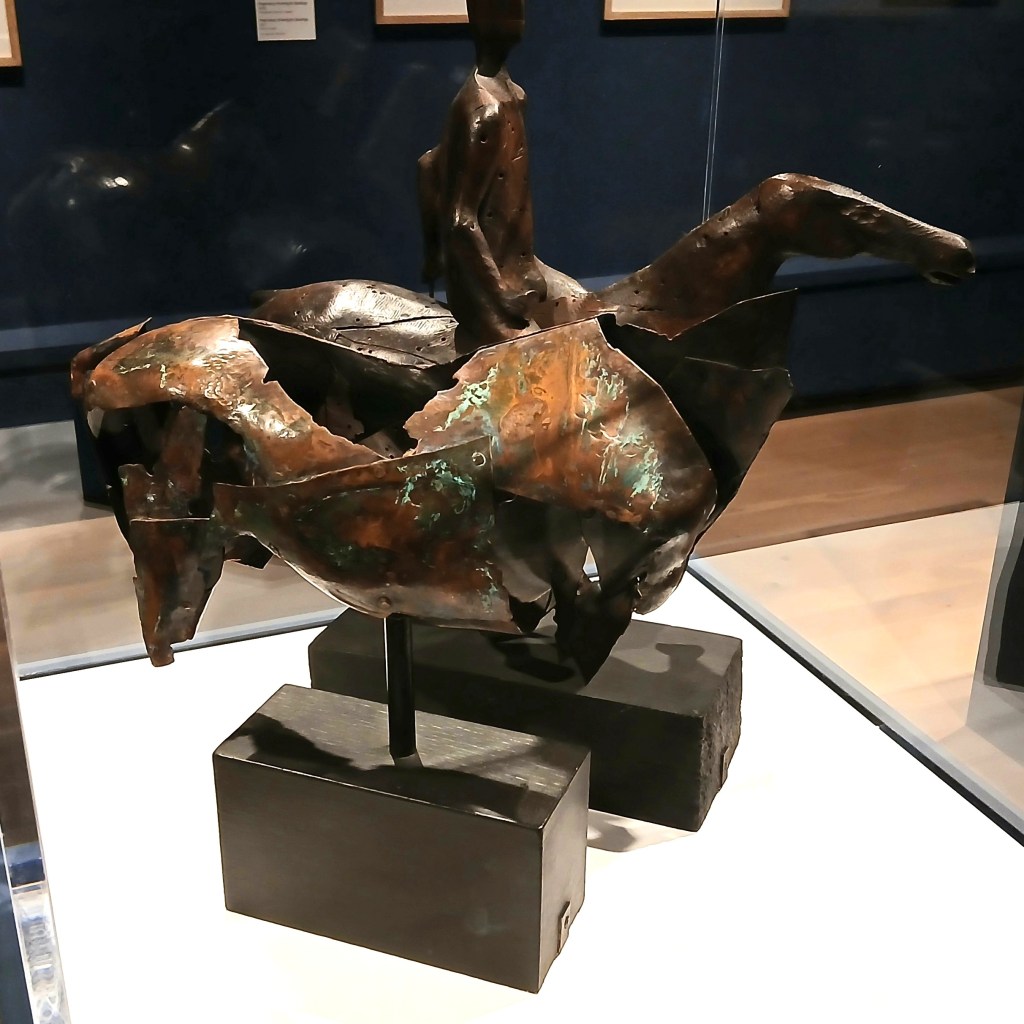
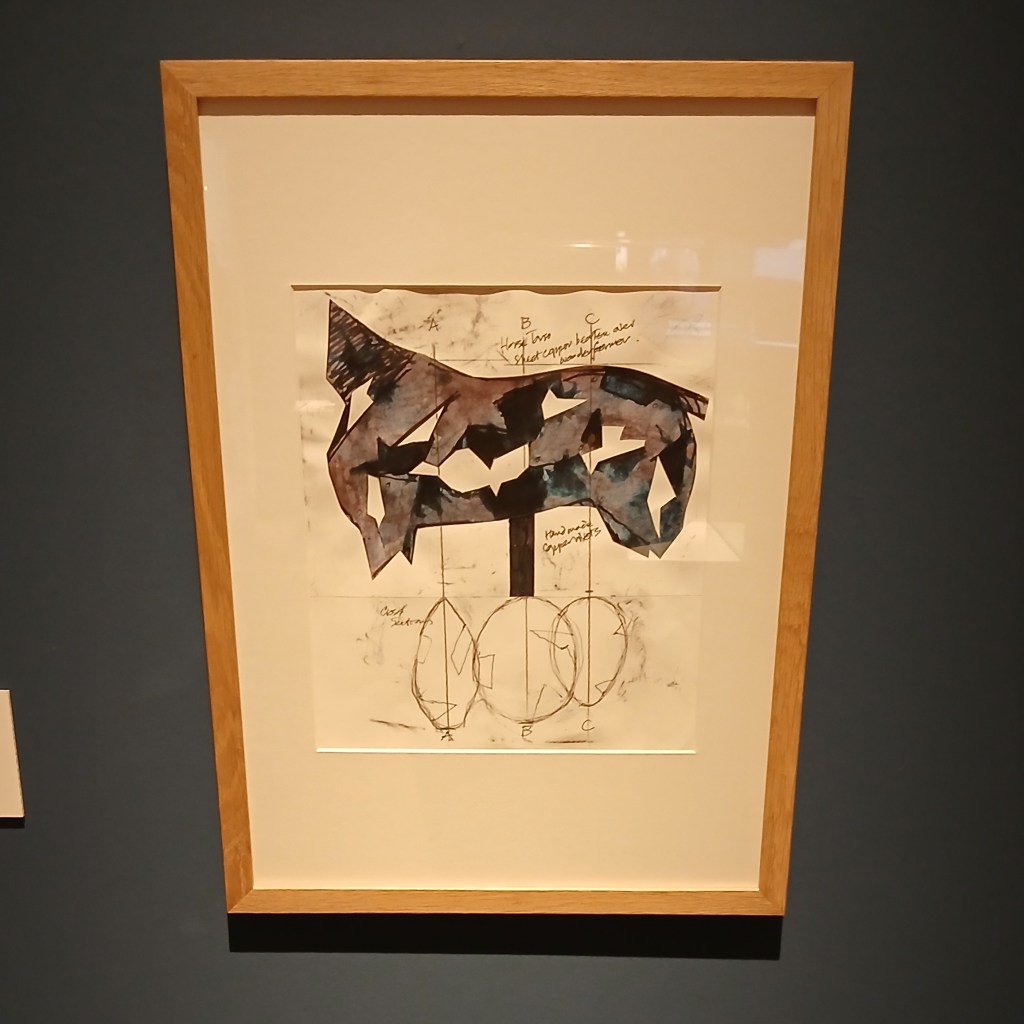
I’m reminded of Boccioni once again when I arrive at Horse Torso (1992; figure 9), which brings to mind the Italian prodigy’s Dynamism of a Speeding Horse + Houses (1914-15).[4] Here, Gosney uses his aforementioned technique of pressing copper pieces around a wooden former, but stops short of recreating the whole form of the horse and rider, settling instead on a strikingly abbreviated, semi-abstract sculpture.
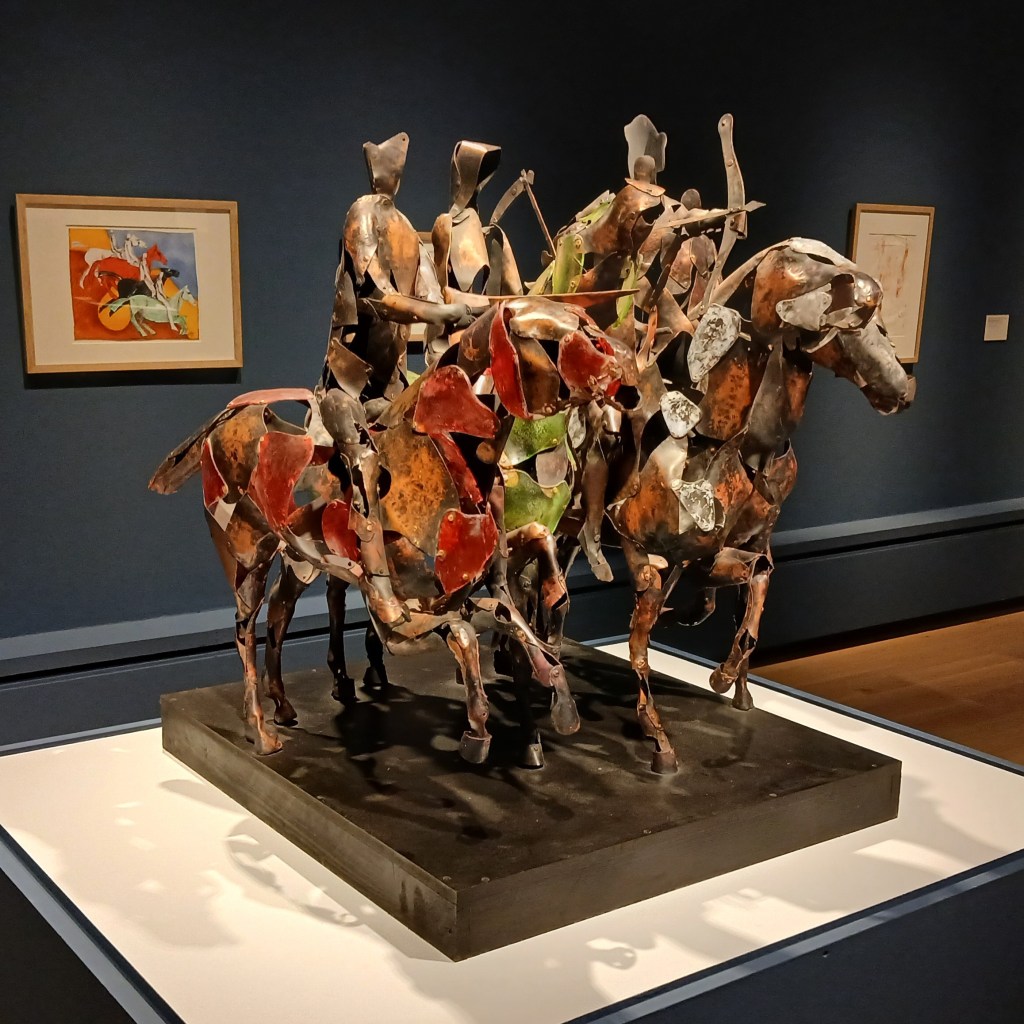
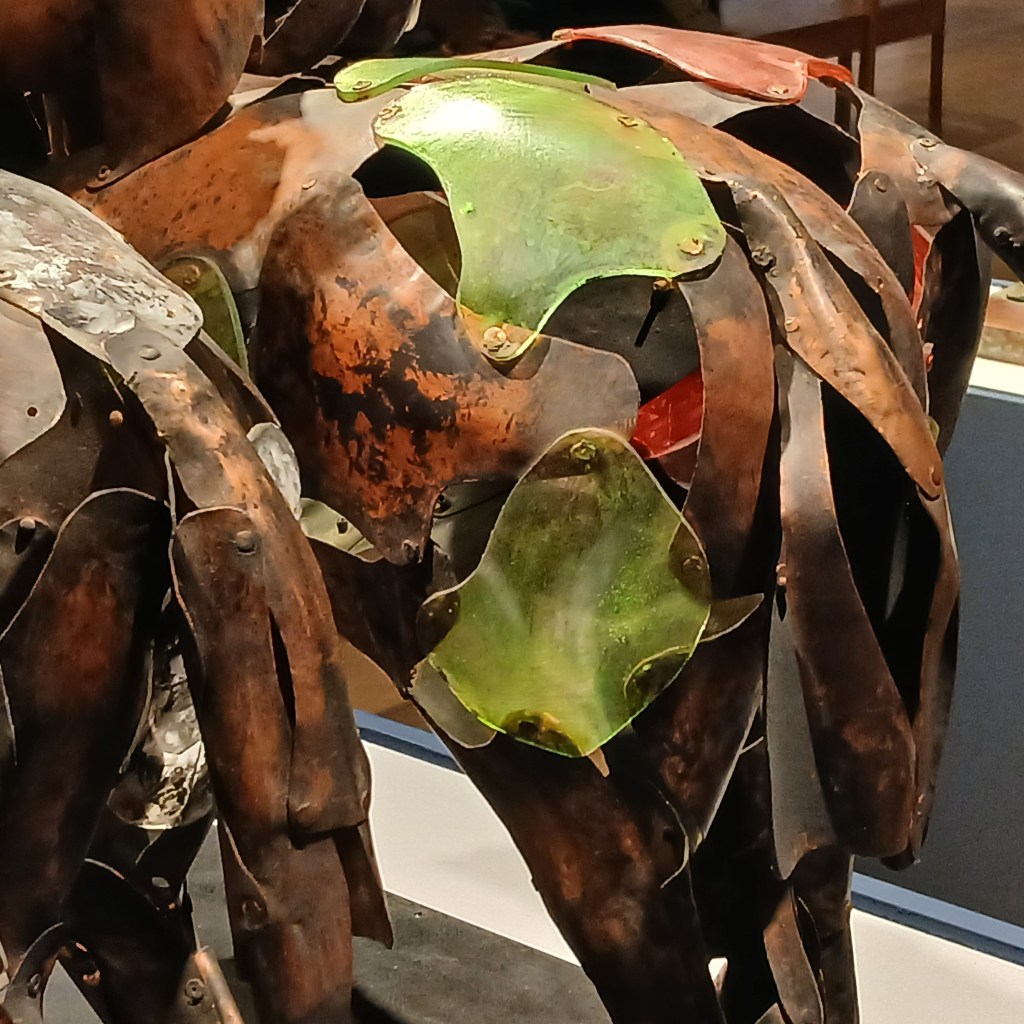
The most eye-catching work in the exhibition, however, is The Four Horsemen of the Apocalypse (2016; figure 10). Here, Gosney employs an unusual pairing of materials to create an imposing and visually jarring work, punctuating his usual copper pieces with sections of white, red, black, and green Perspex to symbolise pestilence, war, famine, and death.[3]
The key works in this exhibition are accompanied by preliminary and working drawings. As Gosney explains, his drawings are not simply a precursor to his sculptures – they inform his creative process from start to finish.[1] Some of these drawings are explicitly diagrammatic, demonstrating his skill as a draughtsman, while others function effectively as works of art in their own right, evidencing – just as in his sculptures – a wide range of techniques.
For those discovering Gosney’s work for the first time, Materials and Making presents an artist with a stunning command of his chosen mediums. For those already acquainted with his work, the exhibition demonstrates the depth of thought, preparation, and experimentation necessary to transform the humblest of raw materials into moving, powerful, sensual works of art.
[1] York Art Gallery (2025) New Exhibition to Open at York Art Gallery Showcasing the Work of Yorkshire Sculptor, Harold Gosney. Available at: https://www.yorkartgallery.org.uk/news-media/latest-news/new-exhibition-to-open-at-york-art-gallery-showcasing-the-work-of-yorkshire-sculptor-harold-gosney/ (Accessed: 22 February 2026).
[2] York Museums Trust (2025) Harold Gosney: Materials and Making. 14 November. Available at: https://www.youtube.com/watch?v=-J_hGzKdxhw (Accessed: 22 February 2026).
[3] Harold Gosney: Materials and Making (2025-26). [Exhibition]. York Art Gallery: 15 November-28 June.
[4] Guggenheim (no date) Umberto Boccioni | Dynamism of a Speeding Horse + Houses (Dinamismo di un cavallo in corsa + case). Available at: https://www.guggenheim.org/artwork/580 (Accessed: 22 February 2026).
 Rethinking the Image
Leave a comment