
Image source: https://www.francis-bacon.com/artworks/paintings/study-after-velazquez-0 (Accessed: 20 February 2026). © The Estate of Francis Bacon
Francis Bacon, Study after Velázquez (1950), 198 cm x 137 cm, oil on canvas.
2017 was a significant year for fans of Francis Bacon. The 25th anniversary of the artist’s death was marked by a BBC Two documentary,[1] numerous exhibitions of his work, and the installation of an English Heritage plaque on the site of his famous London studio[2] – a gesture which underlined his significance within the national culture.
This renewed focus on Bacon’s life and work also reached those who had not previously been aware of the artist, including myself. After watching the aforementioned documentary at the beginning of the year, I would develop an interest in Bacon’s oeuvre which would later expand into a much broader fascination with modern and contemporary art.
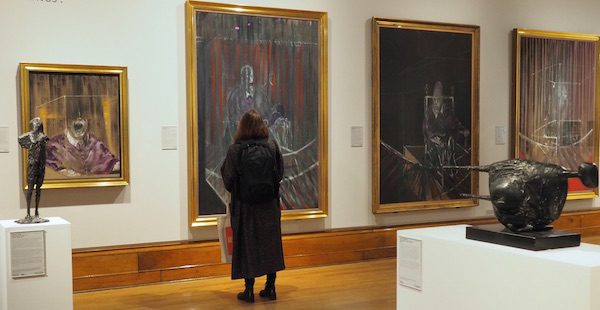
Figure 1 (Photo of exhibition): https://artlyst.com//wp-content/uploads/2017/02/Edit-1-600×310.jpg from https://artlyst.com/news/hull-uk-city-culture-off-strong-start/ (Accessed: 20 February 2026).
Figure 2: https://www.francis-bacon.com/artworks/paintings/head-vi (Accessed: 20 February 2026).
In April 2017, I visited a small exhibition of Francis Bacon paintings at the Ferens Art Gallery in Hull, titled Nervous System[3] and comprising a selection of works from the late 1940s and early 1950s – a period of his long and varied career which was characterised by haunting imagery and a sombre palette.[4][5]
The first work in the exhibition, Head VI (figure 2), is the last in Bacon’s ‘Head’ series. Based on Diego Velázquez’s Portrait of Pope Innocent X (1650),[6][7] Head VI is consistent with other paintings in the series in its depiction of a solitary male figure in a dark, claustrophobic space, but here, the figure is dressed in papal attire. Sitting on a gold throne and enclosed in a cage-like structure, his gaping mouth lets out an anguished, visceral scream.
The intensity of the figure’s expression is made all the more disturbing by the fact that much of his face is invisible, dissolving into a black void in deference to his tormented cry. Elsewhere on the canvas, Bacon’s sparse brushwork conveys the airlessness of the figure’s cramped, stifling environment.
Figure 3: https://www.francis-bacon.com/artworks/paintings/study-after-velazquez-0 (Accessed: 20 February 2026).
The immediate impact of Head VI means that it is commonly regarded as one of Bacon’s greatest masterpieces,[3] and it is quite easily the most powerful painting in this exhibition. The ‘pope’ would be a recurring subject of Bacon’s work throughout the 1950s and beyond[4] – a subject that he would revisit in Study after Velázquez (figure 3).
In this painting, a papal figure is enclosed not by a cage, but by a rope or cord which hangs in front of him. This environment is no less claustrophobic than that of Head VI, however, owing to the red, curtain-like stripes which appear to sit behind the figure while also leaping forward from the sombre background to form an entrapping veil.
His scream is somewhat similar to that of the figure in Head VI, but here, the rest of the figure is equally intact. The result is perhaps slightly less visceral than the earlier painting which sits alongside it (see figure 1), but it is certainly no less enigmatic.
Figure 4: https://www.francis-bacon.com/artworks/paintings/pope-i (Accessed: 20 February 2026).
Bacon’s papal figures are often characterised as the ‘screaming popes’, but this description is not always applicable. The figure in Pope I (figure 4), adorned in papal regalia, displays the same deathly, grey complexion as other ‘popes’, but his piercing stare is devoid of any overt suffering.
The figure occupies a spacious interior, with the thin lines in the top third of the painting suggesting the contours of a high ceiling. He sits on a throne atop a raised plinth, occupying a position of authority, and despite his placement behind a rope in a transparent enclosure, he does not appear to be trapped. Indeed, the figure’s papal staff appears to be resting in front of the rope, drawing attention to an intriguing detail.
It is customary for popes, bishops, and other clergy to hold the papal staff with their left hand, leaving their right hand free to perform the sign of the cross, greet the public, and bestow blessings. Here, however, it is the figure’s right hand which is occupied, calling into question his authenticity and his intent.
As his penetrating stare emerges from the painting’s incredibly dark, oppressive palette, it is easy to imagine this autocratic figure as the architect, rather than the sufferer, of the anguish displayed in Head VI and Study after Velázquez. When viewed alongside those paintings (see figure 1), Pope I can be seen to possess a sense of tension and latent violence which makes it particularly unnerving.
Figure 5: https://www.francis-bacon.com/artworks/paintings/figure (Accessed: 20 February 2026).
The enclosed space of the following work in the exhibition, Figure (figure 5), is an amalgamation of motifs seen in the other three paintings – the cage, the translucent, striped veil, and the rope. At its centre, a ghostly apparition takes the place of a human figure, evoking ideas of death and afterlife and conveying a sense of finality, perhaps representing a resolution to the unexplained suffering of the other works.
In attempting to summarise Bacon’s work, many writers and critics place particular emphasis on the more shocking and violent aspects of his oeuvre. Even here, however, in some of Bacon’s most troubling paintings from a period in which his work tended particularly towards the dark and foreboding, there is nuance, mystery, and complexity.
[1] BBC (no date) Francis Bacon: A Brush With Violence. Available at: https://www.bbc.co.uk/mediacentre/proginfo/2017/05/francis-bacon (Accessed: 20 February 2026).
[2] Francis Bacon (2018) Highlights of the Year: 2017. Available at: https://www.francis-bacon.com/news/highlights-year-2017 (Accessed: 20 February 2026).
[3] Francis Bacon (2017) City of Culture Hull Hosts Bacon’s Popes. Available at: https://www.francis-bacon.com/news/city-culture-hull-hosts-bacons-popes (Accessed: 20 February 2026).
[4] Francis Bacon (no date) 1940s. Available at: https://www.francis-bacon.com/artworks/paintings/1940s (Accessed: 20 February 2026).
[5] Francis Bacon (no date) 1950s. Available at: https://www.francis-bacon.com/artworks/paintings/1950s (Accessed: 20 February 2026).
[6] The Arts Council Collection (no date) Head VI. Available at: https://artscouncilcollection.org.uk/artwork/head-vi (Accessed: 20 February 2026).
[7] Britannica (2025) Portrait of Pope Innocent X. Available at: https://www.britannica.com/art/Portrait-of-Pope-Innocent-X (Accessed: 20 February 2026).
 Rethinking the Image
Leave a comment